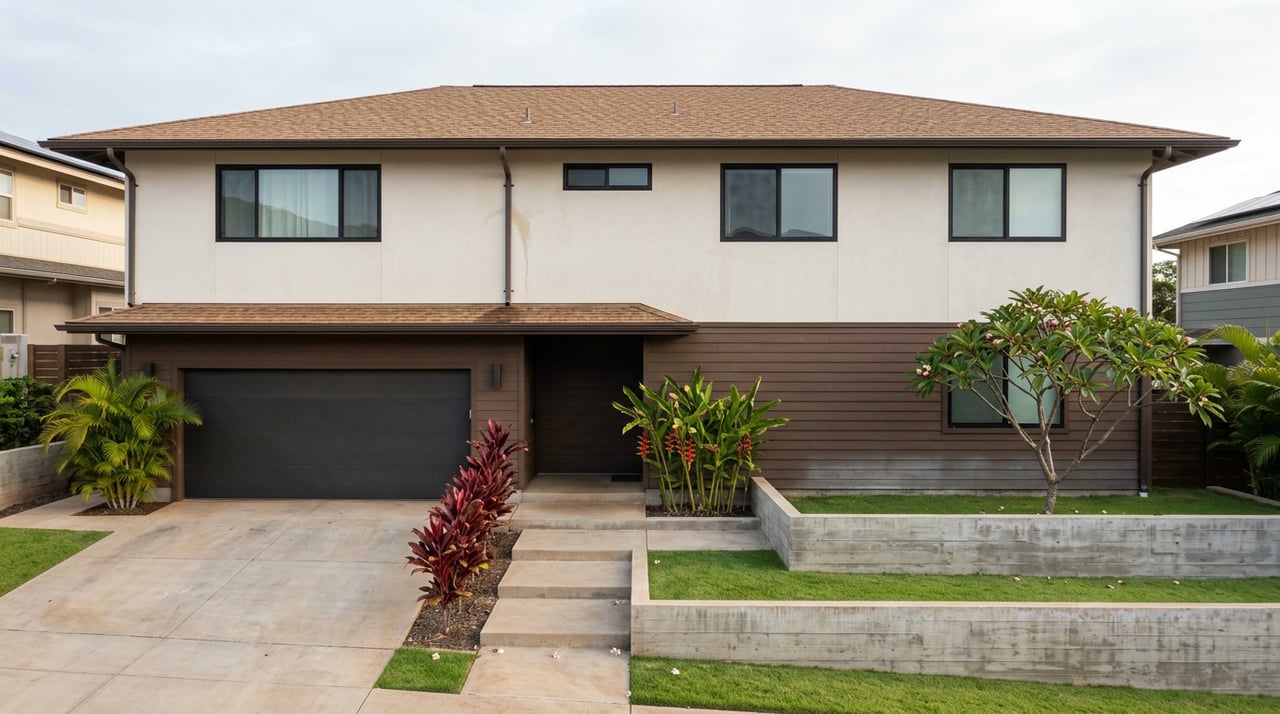
Hele Rolls in Makakilo After Food Network: What Changed
September 17, 2026
September 17, 2026
On September 6, at Churchill Downs in Louisville, a cinnamon roll truck from Makakilo went head to head with a beignet stand from New Orleans for a $50,000 grand prize. Hele Rolls did not win. Stuph'd Beignets & Burgers took the title on the Season 19 finale of Food Network's The Great Food Truck Race, judged by 500 fans, host Tyler Florence, and guest judge Damaris Phillips.
If you live in Makakilo, that loss barely registers as news, because the truck that spent the summer selling rolls in Nashville and the Great Smoky Mountains is the same operation running this week out of the same neighborhood, taking the same preorders, popping up at the same handful of markets. Winning would have changed a bank account. It would not have changed how you actually get a Hele Roll.
Food Network's own cast page for Season 19 lists the team simply as "Hele Rolls from Kapolei, Hawaii." Local coverage tells a slightly more specific story. Hawaii News Now, the Honolulu Star-Advertiser, and Hawaii Public Radio all describe Hele Rolls as a Makakilo business. Both are technically right. Makakilo is the hillside neighborhood where the truck operates and where preorder pickups happen. Kapolei is the broader postal and judicial district that Makakilo sits inside, the name a national casting call reaches for when it needs one word for the whole region. It is a small distinction, and exactly the kind that only registers if you actually live on the hill rather than the flatter blocks below it.
Hele Rolls started in June 2025, not long after co-owner Jasmine Milam's father passed away. The name is a nod to his food truck, Hele Nui. Milam has said she considered naming the business after herself but wanted something that carried his memory forward instead. The business did not even start with cinnamon rolls. Milam and co-owner Brittany "Kawai" Lopez began with doughnuts before shifting to the cream cheese icing rolls that built their following.
They were less than a year into selling food, still running it as a side hustle around other jobs, when a casting agent messaged them on Instagram about a national food competition. Milam has described the moment plainly:
"It's more than just making cinnamon rolls for some extra cash."
That was the whole operation eight months before Churchill Downs: a family recipe, a handful of Oʻahu pop-ups, and an Instagram account someone at Food Network happened to scroll past.
Season 19 opened with eight teams split evenly between sweet and savory concepts, following host Tyler Florence from Nashville through the Great Smoky Mountains toward a Louisville finale. Hele Rolls represented the only sweet-side team from Hawaiʻi, competing against crews from New Orleans, Baltimore, the Bronx, and Los Angeles among others.
By the August 23 episode, Hele Rolls had survived to the final three, a stretch that included at least one Taste Redemption Battle where they went head to head with another team for the right to stay in the race. They kept making the sales numbers even when the taste challenges did not go their way. That consistency carried them all the way to the September 6 finale, where the final two teams sold for two days in Louisville before judges tallied the results at Churchill Downs. Stuph'd Beignets & Burgers, a New Orleans crew that had been on the show since 2016 at their brick-and-mortar location, took the win.
It is a genuinely good run for a business that had not yet turned one year old when the casting call came in. It is also, from a Makakilo standpoint, mostly a story about eight months away rather than eight months of change at home.
Here is the part that actually matters if you live nearby: the way you get a Hele Roll has not changed. Four-packs are still preorder pickup in Makakilo. Individual rolls are still sold exclusively at market pop-ups, tracked through the business's Instagram account, @hele.rolls, the same channel that got them discovered in the first place.
What has changed is how fast that limited supply disappears. At a recent What the Truck?! event in Waikele, Hele Rolls sold out of cinnamon rolls in 45 minutes. That is not a new business model working differently. That is the same small-batch, market-only model meeting a much larger crowd, and the crowd is still winning the race to the counter faster than the ovens can keep up.
The neighborhood's version of a Hele Rolls fan base has also had to be patient with the calendar itself, not just the sellout times. A Hawaiian Telcom pop-up at Ka Makana Aliʻi originally set for August 15 got pushed to August 30 after Tropical Storm Lala moved through the islands. The event still happened. The schedule bent, but the underlying system, a small team fitting pop-ups around whatever else Oʻahu throws at a given week, held.
If you want to actually catch them, the same three moves still apply:
Hele Rolls did not appear in a vacuum. It grew out of a neighborhood food scene that has always run on small, recurring points of contact rather than a single main strip of restaurants. Broke Da Mouth Grindz, My Cafe, Leeward Drive Inn, and Malama Market all serve the same function Hele Rolls does at a smaller scale: they are the plate lunch counters and grab-and-go stops that Makakilo residents actually build a week around, long before any of them get discovered by a national casting call.
The same pattern holds at Makakilo Community Park, the hillside park with tennis and basketball courts, a skate park, a baseball field, and a community center where the Makakilo Community Association runs classes and seasonal events throughout the year. None of it depends on outside attention to keep functioning. A cinnamon roll truck can go all the way to Churchill Downs and back, and the park's Saturday rec league schedule does not need to know or care.
That is the actual thesis worth taking from a summer of national television cameras pointed at a Makakilo kitchen: visibility from outside the neighborhood is not the thing that makes a place work day to day. Hele Rolls got a well-earned moment on Food Network, and the moment was real. But the reason there was something worth filming in the first place is a neighborhood that already knew how to show up for a preorder sheet and a Saturday market table, camera or no camera.
If Makakilo's next food story turns out to be less famous, that is not a step down. It is just the normal way this hillside runs, one pop-up and one plate lunch counter at a time.
If you are already living the Makakilo routine, from the Saturday market circuit to the view from the park's baseball field, and you are thinking about what a move within the neighborhood or off the hill might look like, Hawaii Home Group can walk you through it with the same local specificity as everything else about living here. Start your Oʻahu move, let's find your Hawaii home.
Stay up to date on the latest real estate trends.

We have 10 years of professional real estate experience. We love to help families, veterans and first time home buyers buy and sell. We both relocated to Oahu with our fur babies, to follow our dreams and live the Hawaii livestyle. Both of our families have deep roots in real estate, providing us strong real estate foundations.